A Short Dissertation On Drinking Hymns
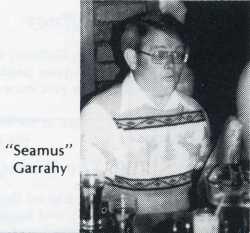
The Drinking Hymns in this album, while certainly rasty in part, are in no way rastier than the modern "R" rated movie. They have been handed down from generations of Singing Drinkers, and many come from the very origins of our language. The Sault Antlers consider this music to be an Endangered Species, and it is our intent to preserve and promote it for future generations of Singing Drinkers. Our world would probably survive without these drinking hymns, but our survival would be, in a small way, perhaps, void of much roguish jest and history. —Seamus
- The Sault Antlers Men's Chorus
-
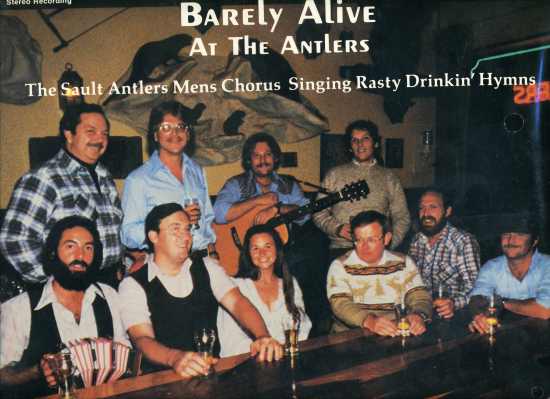
 Barely Alive At The Antlers: The Sault Antlers Mens Chorus Singing
Rasty Drinkin' Hymns
Barely Alive At The Antlers: The Sault Antlers Mens Chorus Singing
Rasty Drinkin' Hymns
- Introduction Time: 0:15
- The Bastard King Of England (With A Spoken Curse Addendum) Time: 3:32
- Hitler Time: 0:36
- The Virgin Sturgeon Time: 1:43
- Man On Top Of Woman (Tune - Bell Bottom Trousers) Time: 0:20
- Suzanne [aka There Was An Old Farmer) Time: 1:27
- The Maid From Amsterdam Time: 1:41
- Featherbeds Time: 0:21
- The Queens Marines [aka I Don't Want To Join The Army] Time: 1:57
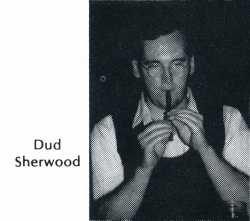
- Dud's Drunken Pipe (instrumental) Time: 1:02
- Kafusalem Time: 2:02
- The Sexual Life Of The Camel Time: 0:27
- Daffney Time: 0:21
- The Winnipeg Whore Time: 1:23
- What Color [aka The Mayor Of Bayswater] Time: 2:23
- I'm Looking Under [Tune - I'm Looking Over A Four Leaf Clover] Time: 0:28
- The Chandlers Shop Time: 1:37
- Four Letter Words Time: 2:21
- With Me Hand [aka Let Me Touch Your Garter; Tune - Silver Thread Amongst The Gold] Time: 0:53
- O'Reilly's Daughter Time: 2:02
-


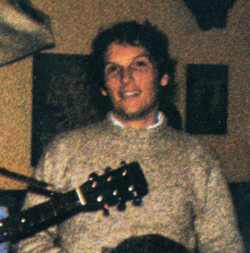
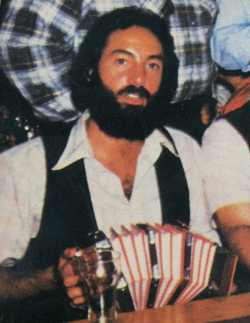
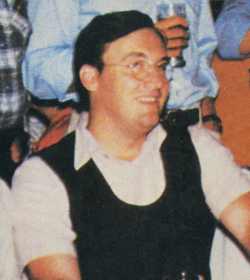

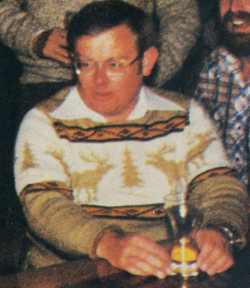
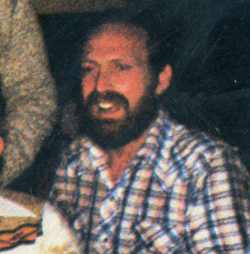
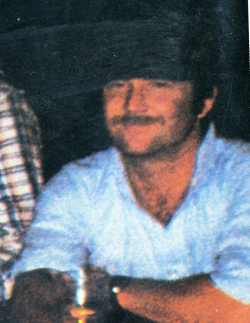
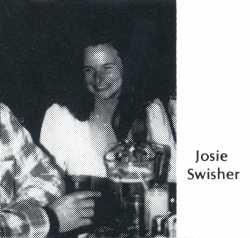
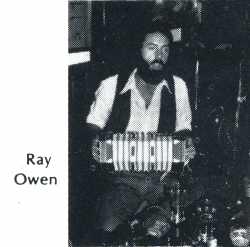
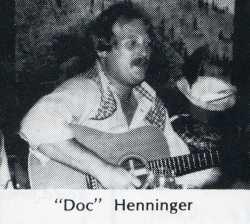
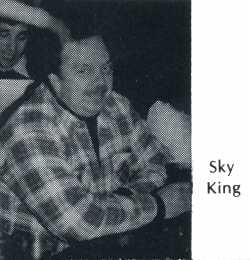
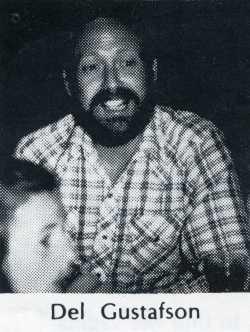
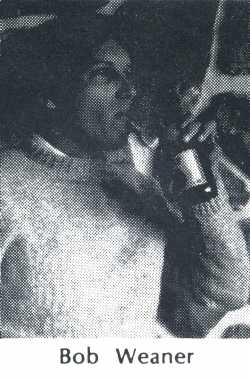
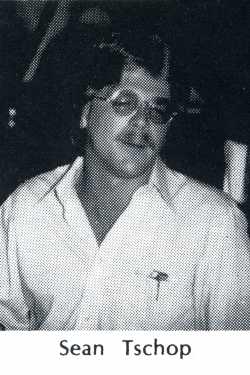
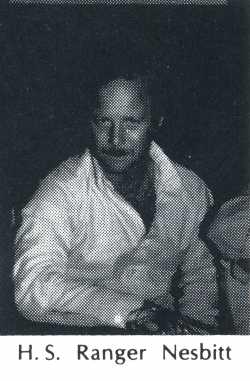
THE ANTLERS
THE ANTLERS BAR on Portage Avenue, like the city of Sault Ste. Marie, is in a state of suspended animation. That is, there is a prodigious amount of junk hanging from unseen wires above the occupants' heads, like so many swords of Damocles, a veritable cloud of rifles, pawn-brokers' signs, moose, and a birch bark canoe just swaying up there, denying gravity and the laws of physics.
Tourists who eat in the Antlers often come down with feelings of anxiety because of this, and because of the stories they have heard about the place.
The Antlers Bar was first known as the "Bucket-of-Blood Saloon and Ice Cream Parlor." It was run during the Prohibition days, and so it had to have a front. The place was closed down, however, when internal revenue agents discovered that it sold only one quart of ice cream a month, and yet took in a profit of $900.00. It's been said that the "Bucket-of-Blood" then became the first lemonade stand in history which refused to serve minors.
Actually, the history of the venerable saloon goes back more than four generations, three families of owners, with the current family ownership, the Kinney family, contributing most of the memorabilia that adorn the ceilings and the walls, and the previous owners, Tony Rogers, Jack Brulle, and Al LeLievere, supplying the legends that surround it.
The story (false) is that the Kinneys acquired all the junk that hangs from the ceiling by barter. Local wags point out to visitors that the Antlers had a policy of exchanging money for material goods; thereby operating one of the few "bar" - gaining economies in the world.
Anyone who ran out of money on a good binge, so the tale goes, could trade a rifle or another antique for enough loot to get stoned for a while. In a town that has its share of habitual drinkers who also happen to be broke, it seems like a good story.
The truth is that when the Kinneys took over in 1948, there was little ornamentation on the walls, and most of that is not reprintable. Harold and Walt Kinney, enterprising former Detroit policemen, then took over and "steaked" out the place. That is they added prime steak to beer and booze, and they have had a meaty business ever since.
One story persists, however, that one of the chief patrons. Tiny T., was one of the chief contributors to Antlers museum. According to some local tourist guides, Tiny, while on a two-week toot, traded a moose head, his pistol, his watch, his cousin, and his Pontiac. All of the stuff now adorns the upper atmosphere of the bar, they point out, except for the cousin and the car. The cousin sits stuffed on one of the stools, and Tiny's car is parked nearby, next to a huge log that was left there by a drunken lumberjack, who thought he could get a case of Jack Daniels for a stick of pulp.
But there is an intellectual side to the life in the Antlers. It is the country club of the working class. Small, very small, fortunes are won and lost in spirited games of daytime cribbage. Nighttime activities center on pool, good food and parties. Toivo Suomi and the Finnish Five
performed with authentic Scandinavian folk songs for three nights in 1959 on one of the tables. Several episodes of Gunsmoke were filmed there. And the Antlers was the other home of the Detroit Red Wings hockey team when they once trained in the Sault.
Nowadays, the Antlers gives lessons in boat whistles; in fact, whistles and horns of all kinds. You can usually tell the importance of a guest, or the distance a visitor has travelled, by the combination of whistles, bells and honks from the bar.
The biggest noise is saved for the day of days, the Seventeenth of March. Corned beef and cabbage is the menue, spiked with Kelly green colored beer. On this day all strata of life descend on the bar, with the mayor of the town, townspeople, and the family groups blending with servicemen, foreigners and people from Dafter. It is a festival to be experienced.
The Irish tradition has been saddened by the death of both Walter and Harold recently, but the family operation is continued by Mrs. Walter Kinney and her son, Walt, Jr.; oldtimers continue to tell tales from tall stools, while college students and gourmets feast on Paul Bunyan hamburgers and sizzling steak.
There are a great many truths in the world, but you may never hear them in the Antlers Bar. A truth may seem like a lie in a place where so many lies have been told, and where the insecurity of the world seems small compared to the lingering doubt that some of that stuff up above and all around is due to come down, like the sword of Damocles, and end it all.
SAULT ANTLERS RECORDINGS FOXTROT KILO AVIATION, INC. 1000 Lincoln Way West Gettysburg, PA 17325 (717) 334-9145
Additional copies 10¢ each write or call
SAULT ANTLERS RECORDINGS FOXTROT KILO AVIATION, INC. 1000 Lincoln Way West Gettysburg, PA 17325 (717) 334-9145