- Ewan MacColl & Peggy Seeger
-
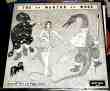 The Wanton Muse
- The Ballad Of The Trades Time: 3:27
- The Shepherd Lad Time: 2:26
- The Wanton Seed Time: 0:58
- The Wind Blew The Bonnie Lassies Plaidie Awa' Time: 2:14
- The Coachman And His Whip Time: 2:52
- The Thrashing Machine Time: 1:35
- Maid Of Australia Time: 2:43
- The Cuckoo's Nest Time: 0:46
- The Gairdener Chylde Time: 3:33
- The Vinter Time: 3:14
- Andrew And His Cutty Gun Time: 1:53
- The Game Of 'All Fours' Time: 2:12
- The Cobbler Time: 2:31
- The Modiewark Time: 2:27
- The Furze Field Time: 2:32
- The Long Peg And Awl Time: 1:29
- The Maid Gaed To The Mill Time: 1:30
- The Bird In The Bush Time: 1:56
- She Was A Rum One Time: 1:50
-

THE WANTON MUSE
sung by
EWAN MACCOLL
accompanied by Peggy Seeger on :
Appalachian dulcimer, English concertina,
Guitar, 5-string banjo
Chorus: Denis Turner, John Faulkner, Terry
Yarnell
SIDE ONE
BALLAD OF THE TRADES (English) Guitar,
English concertina
This comprehensive catalogue of the tools of the trades might be said to sum up
the contents of this album. Each of the songs has been conceived in the
terminology
of the trade of its maker, each process of work honed down to fine shades of
description, each symbol exactly mirroring or extending the tool(s) used, or the
medium in which the trade is carried on. Such a song could well be extended into
modern life, what with the myriad of new professions, trades and skills daily
being
developed - as long as the eye remains receptive to impressions of shape, the
hand to impressions of texture and the mind open to analogous sensation and
creation, 'The Ballad of the Trades' could well have thousands of verses !
(Source : a collation of several broadside texts, with tune by the singer.)
THE SHEPHERD LAD (Scots) Unaccompanied
'The Baffled Knight', the title by which
Professor Child designates this ballad type
(No 112 in his collection), was first printed in the Deuteromelia of
Thomas Ravenscroft, in 1609. It was henceforth a favourite with broadside printers. A second,
third and fourth part of the ballad was written towards the end of the 17th
century
and were later combined into the version found in the Pepys ballads. A similar
story
is found in ballads from Spain, Portugal, Italy, France, Germany and Denmark.
(Source: from the singer's father, William Miller, with some verses collated
from
Greig's LOST LEAVES.)
THE WANTON SEED (English) Unaccompanied
Gershon Legman : 'The folklore, the science, the
religion and the songs of people
living this (agricultural) are filled, in a sincerely accepted way, with the
profound
sexual tonality, both open and symbolized, that is basic to its fabric. The
sexuality and
fertility of the human being becomes his or her principle feature, as it is in
biological
fact, and the prime concern of the husbandman. He sees it, he accepts it, and he
celebrates it in his folklore and song, precisely as he accepts the same
immanent
sexuality of every other part of his life, with the superb simplicity of
Shakespeare's
ANTONY AND CLEOPATRA II, ii. 242 : "He plough'd her, and she cropt." '
(Source: text: Reeves, p. 276; tune: from the Hammond Collection in the Cecil
Sharp House, London, D.404.)
THE WIND BLEW THE BONNIE LASSIE'S PLAIDIE
AWA' (Scots)
Unaccompanied
Robert Ford printed a version of this spirited
song in VAGABOND SONGS AND
BALLADS and, in a note, writes: My friend, Mr. D. Kippen of Crieff, has it that
the
song was composed by an Irishman who lived in Crieff near to the cross in the
early
years of the present century (early 1800's) and who was known by the name of
"Blind Bob".' Ford describes the version in his book as 'a little high-kilted",
though
'by no means rudely indelicate.' In actual fact the kilt stops short at the
ankle and
only the most bigoted Presbyterian might be expected to register shock at the
sight
of a mere inch or two of bare leg. Our version on the other hand, has abandoned
the
kilt completely and goes tripping by with bare hurdies, unabashed and
unrepentant.
(Source: Hughie Graeme, Galloway singer.)
THE COACHMAN AND HIS WHIP (English)
English concertina
A somewhat longer version of this can be seen in the collection of Original
Broadsides
in the Nottingham University Library. This particular version was learned from
Sam
Larner of Winterton, Norfolk, in 1961.
THE THRASHING MACHINE (English)
Unaccompanied
It is easy to place a time-limit at which this
song could have been started, for the threshing machine came of age in the late 1780's.
The song is delicately balanced, not only in its use of the machine analogy, but
the fact that threshing is a harvesting process, closely tied up with the concepts of
fruition. The adopting of such a machine as a symbol is but an extension of the older type
of song which glorified the 'tearing scythe' or the reaper's hook, and so on. And, for
people who lived close to the land and depended upon it for their sustenance, they
themselves might often have seemed but extensions of the same natural
sequence of events which provided them with their living. (From the singing of Anne O'Neil, Belfast tinker
woman, N. Ireland.)
MAID OF AUSTRALIA (English) Unaccompanied
This is a great favourite among country singers
in Norfolk, although it appears to be unknown elsewhere. Learned from the singing of
Sam Larner, of Winterton, Norfolk.
THE CUCKOO'S NEST (Scots) Unaccompanied
Like 'The Bird in the Bush', this fragment is the
terse versification of a good sexual analogy. (Source: learned from Jeannie Robertson,
Aberdeen.)
THE GAIRDENER CHYLDE (Scots) Appalachian
Dulcimer
No. 219 in Child's definite collection, this
ballad seems to have been collected only from northern sources and even then but rarely.
Its first appearance in print was in a rather corrupt form in an Edinburgh chapbook
dated 1776, The floral codes for desire, love, rejection, etc., are common in
country songs, but rarely is the code as elaborate as it is here. (Source: from the singer's mother, with verses
collated from Greig's LOST LEAVES,)
SIDE TWO
THE VINTNER (Scots) Concertina
Broadside versions of this piquant story can be
found in both the Roxburghe and
the Bagford collections under the title of 'The Fair Maid of Islington', or The
London
Vintner Over-reached'. The version given here was collected by Peter Hall, of
Aberdeen, from Jessie MacDonald, a 97-year-old MacDuff (Banffshire) woman.
ANDREW AND HIS CUTTY GUN (Scots)
Unaccompanied
The earliest published song under this title
appeared in Alan Ramsay's TEA-TABLE MISCELLANY (1740). Robert Burns, in a letter to
George Thompson in 1794, described the version given here as 'the work of
a master'. (Source: Merry Muses of Caledonia, p. 1 20.)
THE GAME OF 'ALL FOURS' (English) Unaccompanied
All Fours (or High Low Jack and the Game) was still a popular card game as late as the mid-1930's. The song to which the game gave its title has, apparently, been collected in many parts of England but, until Frank Purslow published Gardiner's version in MARROWBONES, appears never to have got into print. The version here is from the singing of Sam Larner of Winterton, Norfolk.
THE COBBLER (English) Unaccompanied
From the singing of George Spicer, Copthorne,
Sussex. An almost identical text can be seen in the collection of Original Broadsides
in Nottingham University Library.
THE MODIEWARK (Scots) Unaccompanied
Of all the creatures abounding in field, river, forest and mountain, the most celebrated is neither deer nor dog, fish nor fowl, It is the modiewark, or mole, which enjoys the most popularity as an erotic symbol in Scots and English country songs. This witty example of the gype was collected by Burns. (Source: text, Merry Muses of Caledonia, tune from Johnson. No. 354.)
THE FURZE FIELD (English) Appalachian
dulcimer
This is a curious and unique song - it is
obviously passionate, obviously directed
at one person (a man), hence meant to be sung by a woman. Yet it is the kind of
song one almost never hears sung by a woman! It was collected from Mr. Moses
Mills at Preston Candover, Alresford, Hants, in 1907 by George Gardiner. It is
the
kind of song which was the staple fare of the chapbooks, the cheap, popular
collections of songs sold on the streets from the early 1700's onwards. Its
circular,
almost fugue-like melody, its incremental repetition, the tenderness and
gentleness of
conception and utterance, set it quite aside in atmosphere from the rest of the
songs
on this album.
THE LONG PEG AND AWL (English) Unaccompanied
Nearly every male country singer in southern England has such songs as this in his repertoire, although hardly ever do such songs as this appear in print or get sung in mixed company. The symbol is, of course, too obvious to ignore, too common in communities where the small craftsman plying the tools of his trade is a commonplace. This particular piece has chiefly been collected in southern England, in eastern Canada and northern United States. (Source: from the singing of Harry Cox, Catfield, Norfolk.)
THE MAID GAED TO THE MILL (Scots)
Unaccompanied
This defiant assertion of the right to be wanton
is a central theme in Scots literature and a constantly recurring one in traditional
Scots songs. An English version The Miller and the Lass' can be found in the Cecil
Sharp manuscripts. (Source: from the singer's father, collated with
verses from David Herd.)
THE BIRD IN THE BUSH (English)
Unaccompanied
This is one of the most intensely amorous songs
in the entire English repertory. The
quiet, leisurely action and the disarmingly simple language succeed in producing
an
atmosphere compounded equally of sensuousness and mystery. The Scots air
which accompanies the text is from Christie's TRADITIONAL BALLAD AIRS.
SHE WAS A RUM ONE (Scots) Banjo
For the north-east Scots ploughman, the horse was a sacred beast, and women were often described in horsey terms, compared to horses in build, stride and character. The final verse, although very direct, is typical of the bothy songs made by these plowmen. As Rob Donald, the Gamrie shepherd, commented after hearing this song for the first time, 'That a gey rough sang, but it gets richt to the hairt o' the maitter.' And that is an understatement, (Source: from the singing of Jeannie Robertson, Aberdeen.)
All the songs recorded for this album have in common the theme of sexual encounter and desire, a theme which is shared in some measure by the overwhelming majority of English and Scots folksongs. The amatory pieces presented here, however, differ in some respects from the general run of traditional love songs. For one thing, they are all more concerned with the act of love than with an abstract idealisation of it; indeed, they are scarcely concerned at all with romantic love, with its sighs and protestations of fidelity, its frustrations and betrayals instead they deal with physical desire and the joys and pleasures attendant on the consummation of the body's appetite. They are, in short, erotic folksongs.
They differ, too, in the manner of their treatment of the subject. All of them may be broadly described as euphemistic. In some of them, the action flows, so to speak, from a single extended metaphor; in others, a series of analogies are skilfully combined like a set of variations on a musical theme. In one or two cases a single phrase or even a single word embedded in the text informs us that the song is in code and at the same time serves as a key to unlock the code. The metaphors may be as delicately oblique as in 'The Bird in the Bush', 'The Gairdener's Chylde' and the 'Furze Field'- or as obvious as those used in 'The Cobbler' or the Thrashing Machine'. They can be tender, boastful, sly, lusty - but they are never coy.
A third point of difference between the songs in this collection and the main corpus of traditional love songs is that most of the pieces here remained unpublished until comparatively recently, or were printed in versions from which erotic detail was almost entirely expurgated. Allowing for the fact that some collectors bowdlerized folksong texts with an eye to popular publication, and in particular to school publication, it is still odd that these revised versions can also occasionally be found in the pages of folk society journals. Equally strange and irritating are those isolated single verses followed by a note informing the reader that the remainder of the text 'is of a character unsuitable for the pages of this journal'. One asks oneself why it is suitable to print John Donne's rapturous climactic line '0 my America, my Newfoundland !' and why a Norfolk farm labourer's enormously satisfying cry of 'Then I entered the bush of Australia' is unsuitable.
Aristophanes, in The Lysistrata, has the magistrate say: 'Another (husband) will go to the cobbler, a great strong fellow with a great long tool, and tell him: "The strap of one of my wife's sandals presses her little toe, which is extremely sensitive; come in about mid-day to supple the thing and stretch it." ' Balzac, in the opening sentence of the short story, entitled Innocence, swears: 'By the double red crest of my chanticleer and by the pink lining of my love's black slipper!' Publishers, even in Victorian times, did not consider Aristophanes or Balzac to be unsuitable for publication; why then, is a traditional song like 'The Cobbler' who 'to the bedroom goes mending ladies' shoes' confined to manuscript collections?
Again, why is it necessary when commenting on traditional songs such as 'The Molecatcher' or The Furze Field' to describe their affectionate euphemisms for male and female genitals as 'the lingua franca of the folk'? It is also the 'lingua franca' of Shakespeare, Jonson, and the whole tribe of Elizabethan poets and dramatists, not to mention Plautus, Terence, Sappho, Virgil, Ovid, Chaucer, Burns and indeed almost every poet who has ever concerned himself with the most absorbing of all themes.
Gershon Legman, in his magnificent work on erotic folklore and bibliography (wittily entitled THE HORN BOOK), writes: 'Erotic folklore is to be collected for the same reason that it is proliferated : because it is about sex. That is what makes it interesting both to the "oral source" and to the collector - who is supposed to be a human being, with all the organs and impulses of a human being - that is what makes it socially valuable and historically important. Sex, and its folklore, are far more interesting, more valuable, and more important in every social and historical sense, than, for instance, the balladry of murder, cruelty, torture, treachery, baby-killing, etc., which are the principal contents, to give only one familiar example, of the Child ballads.' An emphatic statement, but no more emphatic than the one made by Beatrice in John Marston's Dutch Courtesan: 'We pronounce boldly robbery, murder, treason, which needs be far more loathsome than an act which is so natural, just and necessary as that of procreation. You shall have an hypocritical vestal virgin speak that with close teeth publicly which she will receive with open mouth privately ... I love no prohibited things, and yet I would have nothing prohibited by policy but by virtue, for as in the fashion of time, those books that are called in, are most for sale and request, so in nature those actions which are most prohibited are most desired." '
SHORT BIBLIOGRAPHY OF SPECIFICALLY MENTIONED SOURCES
(Burns, Robert) MERRY MUSES OF CALEDONIA (ed. by James Barke and Sidney
Goodsir Smith) (Macdonald, Edinburgh, 1959).
CHILD, Prof. F. J, (ed.) THE ENGLISH AND SCOTTISH POPULAR BALLADS
(Folklore Press, in ass. with Pageant Book Co.,
New York, 1956).
CHRISTIE, W.. TRADITIONAL BALLAD AIRS (Edmonston & Douglas, Edinburgh,
1876).
FORD, Robert, VAGABOND SONGS AND BALLADS OF SCOTLAND (Alexander
Gardner, Paisley, 1901),
GREIG, Gavin, LOST LEAVES OF TRADITIONAL BALLADS (Aberdeen, 1925).
HERD, David, SCOTTISH SONGS (Kerr & Richardson, Glasgow, 1869).
JOHNSON, James, SCOTS MUSICAL MUSEUM (James Johnson, Edinburgh,
1787).
LEGMAN, Gershon, THE HORN BOOK (University Books, New York, 1964).
PURSLOW, Frank, MARROWBONES (E.F.D.S. Publications, London, 1965).
REEVES, James. THE EVERLASTING CIRCLE (Heinemann, London, 1960),
Sleeve printed in England by MacNeill Press, London, S.E.1.
DECCA RECORDED SOUND MONO & STEREO RECORDS • MONO/STEREO MUSICASSETTES • STEREO 8 CARTRIDGES
© 1968 Ewan MacCoil
Regd. Trade Mark
THE DECCA RECORD COMPANY LIMITED,
Argo Division, 115 Fulham Road, London, SW3 6RR
Laminated with 'Clarifoll' made by British
Celanece Limited